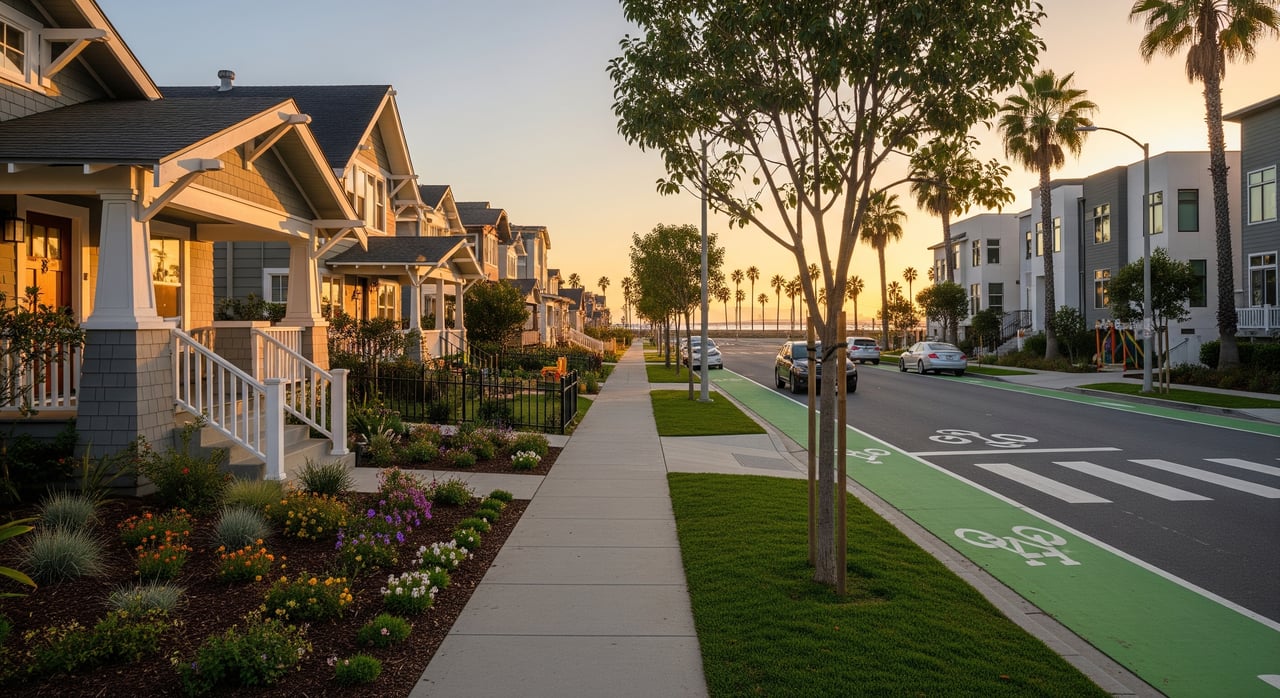
Do you want a neighborhood where you can grab coffee, hit a playground, and walk kids to school without loading the car? If you are planning a move in Long Beach, walkability can make daily life easier and more enjoyable. In this guide, you will learn what “walkable for families” really means, which Long Beach neighborhoods deliver it, and the tradeoffs to consider. You will also get practical tips to test walkability before you buy. Let’s dive in.
What “walkable for families” means
Not every walkable area works well for family life. Here is how to measure it when you tour homes and compare blocks:
- Everyday errands on foot. Check if daily needs are within a 5 to 10 minute walk, including a grocery store, pharmacy, and quick dining. Tools like Walk Score help you compare addresses, but combine the score with your own walk tests.
- School and park proximity. Aim for an elementary school within about 0.5 mile and a park or playground within 0.25 to 0.5 mile. Use Long Beach Unified School District resources to confirm attendance boundaries for a specific address.
- Family amenities nearby. Look for libraries, community centers, kid-friendly restaurants, spray pads, and youth sports fields. The City’s parks directory is a good starting point to explore options by neighborhood through Parks, Recreation and Marine.
- Transit and bike options. If you want car-light living, check coverage and frequency from Long Beach Transit. Many families also rely on the Metro A Line from Downtown for regional trips, with bikes or strollers for first-and-last-mile connections.
- Pedestrian environment. Walk the area at school drop-off and early evening. Note sidewalk completeness, marked crosswalks, lighting, and traffic calming. For broader context on safety trends, review Long Beach Police Department reports and dashboards.
- Housing fit. Consider whether a condo, townhome, or small-lot house suits your routine. Some walkable areas trade private yard space for closer access to parks, beaches, and community activity.
Top walkable Long Beach neighborhoods
Below are neighborhoods that consistently deliver strong walkability for families, with different vibes and housing choices. Remember that walkability is often block by block, so plan a few on-foot visits.
Downtown & East Village
- Why families like it: Dense, mixed-use core with restaurants, services, the waterfront, and cultural spots within short walks. The Downtown Long Beach Alliance highlights frequent events that keep streets active.
- Within a 10-minute walk: Grocery and markets, the Promenade, Pine Avenue, pocket parks, and family attractions like the waterfront. Libraries and after-school options are close by.
- Transit notes: Terminus of the Metro A Line, plus broad Long Beach Transit coverage for citywide trips.
- Housing snapshot: Condos, lofts, and walk-up apartments; some newer townhomes. Private yards are limited, but parks and promenades help fill the gap.
- Tradeoffs: Higher density and nightlife in certain blocks. Parking for visitors can be tight during peak times.
Alamitos Beach & Bluff Park
- Why families like it: Ocean breezes, grassy bluffs, and neighborhood cafes create an easy daily rhythm. You can reach beach paths and small shops without the car.
- Within a 10-minute walk: Beach access, playgrounds, and local markets along Broadway and 2nd Street, plus the bluff for stroller-friendly walks.
- Transit notes: Several bus routes serve the area with quick links to Downtown and Belmont Shore.
- Housing snapshot: Historic bungalows, apartments, and a mix of single-family homes near the coast.
- Tradeoffs: Premium pricing close to the ocean and seasonal traffic. Street parking can be competitive near popular beach blocks.
Belmont Shore
- Why families like it: A true main street feel on 2nd Street with dining, services, and errands in one compact corridor. Community events and a farmers market add to the walkable lifestyle through the Belmont Shore BID.
- Within a 10-minute walk: Beach access, small parks, casual dining, and everyday shops along 2nd Street.
- Transit notes: Strong bus service on the corridor. Easy walks to Alamitos Bay and the pier.
- Housing snapshot: Single-family homes and small condos on residential side streets; coastal properties trend higher.
- Tradeoffs: Corridor blocks can be busy on weekends and evenings. Some errands may still require a short drive for larger grocery runs.
Bixby Knolls
- Why families like it: Atlantic Avenue has a proud, local main street vibe with independent shops, family-run restaurants, and regular community programming.
- Within a 10-minute walk: Cafes, restaurants, and neighborhood services, plus nearby parks and a public library branch depending on your block.
- Transit notes: Well-served by local buses; regional trips may be easier by car compared to Downtown or the coast.
- Housing snapshot: Primarily single-family homes with mid-century character on tree-lined streets.
- Tradeoffs: Fewer beach amenities in walking range. Some errands outside the core may be more car-dependent.
Retro Row (4th Street)
- Why families like it: A compact stretch of vintage shops, coffee spots, and small theaters gives strong pedestrian energy. It is easy to combine errands with a park stop nearby.
- Within a 10-minute walk: Cafes, casual restaurants, small markets, and neighborhood parks depending on your exact address.
- Transit notes: Good bus coverage. Walkable to adjacent neighborhoods for schools and green space.
- Housing snapshot: Cottages, small single-family homes, and apartments that vary by block.
- Tradeoffs: Evening activity can bring noise. Larger grocery stores may be a slightly longer walk.
Naples & Alamitos Bay
- Why families like it: Calm canal promenades, pocket parks, and a distinctive island setting invite daily walks. Easy access to marine recreation and bayfront paths.
- Within a 10-minute walk: Small parks, playgrounds, and local cafes, with waterfront strolls that work well for strollers and scooters.
- Transit notes: Lower transit frequency than Downtown or Belmont Shore. Many families walk locally and use short car or bus trips for regional errands.
- Housing snapshot: Predominantly single-family homes with some multi-unit buildings. Waterfront homes command a premium.
- Tradeoffs: Fewer on-island services mean you may walk or drive to nearby corridors for full shopping.
Parks, schools, and libraries to know
- Parks and play: City favorites include El Dorado Regional Park for full-day family outings, Recreation Park for fields and play areas, Bixby Park near the coast, the Colorado Lagoon, Marine Stadium, and many neighborhood playgrounds. Browse facilities by area through Parks, Recreation and Marine.
- Schools and programs: Check address-specific attendance and magnet options with the Long Beach Unified School District. Walk the school route at drop-off time to see crosswalk coverage and traffic flow.
- Community resources: Look for your closest library branch and community center to anchor after-school time, homework sessions, and weekend activities.
Transit and car-light living
A car-free life is possible in parts of Long Beach, but most families prefer a car-light model. Here is what helps it work:
- Use frequent buses for school and activities. The Long Beach Transit network connects many neighborhoods to schools, parks, and community hubs.
- Combine bikes, strollers, or scooters with short transit hops. Check bike lane continuity on your preferred routes.
- For regional trips, the Metro A Line from Downtown links to Los Angeles employment centers. Try a test commute before you commit.
How to test walkability on a tour
- Time the school walk. Aim for 10 minutes or less each way with a safe crossing plan.
- Do a grocery run on foot. Can you reach a full-service store or a reliable neighborhood market in 10 minutes?
- Walk to a park after school. Look for playground equipment, shaded seating, restrooms, and open lawn.
- Check crossings at peak hours. Visit at morning drop-off, late afternoon, and after sunset to note lighting and traffic calming.
- Try a transit trip. Ride a bus to a weekend event or Downtown to see how it feels with kids in tow.
When walkability may not fit
You might prioritize a large private yard, a driveway, or extra storage over immediate access to shops and restaurants. In that case, a less dense neighborhood can still work well if you are close to parks and schools by bike or a short drive. You can also choose a quieter street near a commercial corridor to balance calm evenings with convenient errands.
The bottom line
Long Beach offers several neighborhoods where family life flows naturally on foot. Start by defining what you need within a 10-minute walk, then tour at different times to see how the streets feel. If you want block-by-block guidance and a plan for schools, parks, and transit that match your routine, let a local expert lead the way. Reach out to The Elmer Team to compare neighborhoods, set up walk tests, and get your instant home valuation.
FAQs
Which Long Beach neighborhoods are most walkable for daily family errands?
- Downtown and East Village, Belmont Shore, Alamitos Beach, Retro Row, Bixby Knolls, and Naples offer strong on-foot access to shops, dining, parks, and schools, with tradeoffs that vary by block.
How can I verify a school is within walking distance of a home?
- Use the LBUSD site to confirm address-specific boundaries, then time the walk during school hours to observe crosswalks, traffic flow, and crossing guard coverage.
Where can I find parks and playground details near a specific address?
- Check the City’s Parks, Recreation and Marine maps to locate playgrounds, fields, splash pads, restrooms, and community centers by neighborhood.
What are the main tradeoffs in beach-adjacent walkable areas?
- You get easy beach access and lively commercial streets, but you may see seasonal crowds, weekend nightlife activity, and tighter parking compared to quieter inland blocks.
What transit options help families go car-light in Long Beach?
- Many families pair the Long Beach Transit bus network with biking or walking, and use the Metro A Line from Downtown for regional trips to Los Angeles.
How do housing types differ across walkable neighborhoods?
- Downtown and East Village lean condo and loft, Belmont Shore and Naples skew single-family with some condos, Bixby Knolls is primarily single-family, and Retro Row mixes cottages and apartments.
How can I check safety and pedestrian conditions around schools?
- Review year-over-year trends from the Long Beach Police Department, then walk the route at drop-off and dusk to assess lighting, crosswalks, and traffic calming features.