A Commitment to Clarity & Support Throughout Your
Probate Process


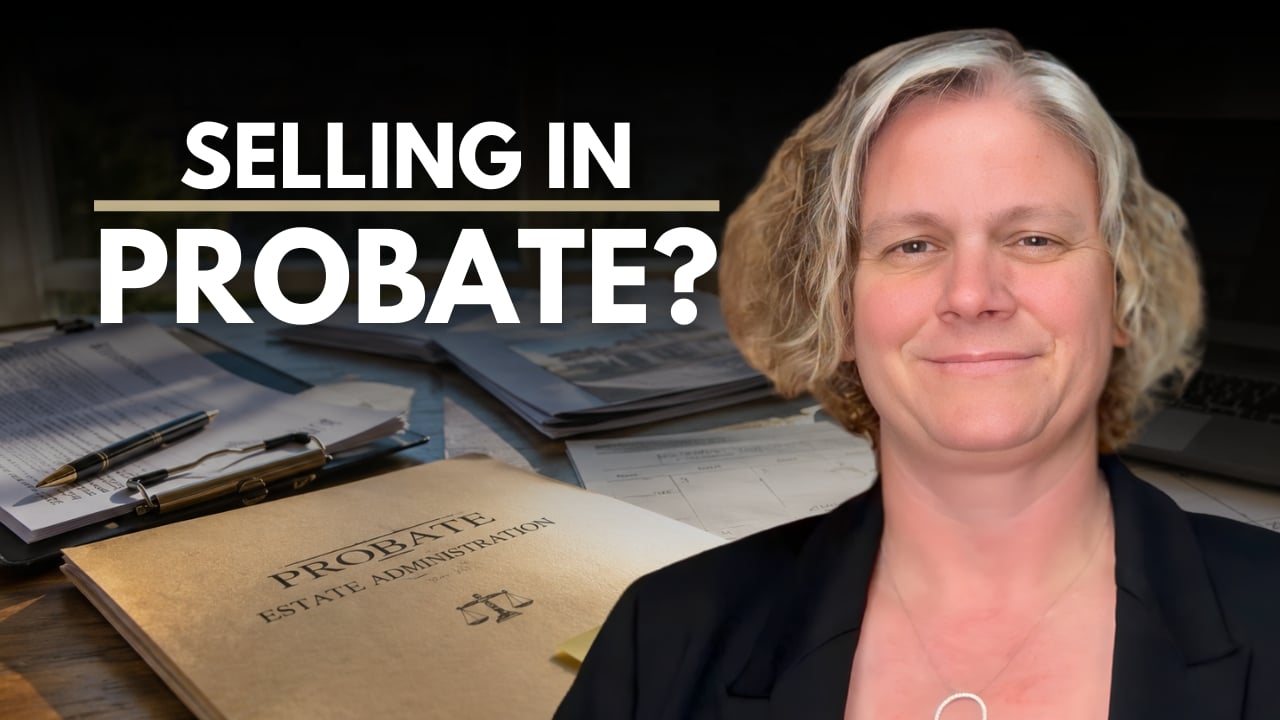
Melinda Elmer, Your Certified Probate
Real Estate Specialist

DRE #01399946 | Phone: (562) 316-2915 | Email Melinda Elmer

I care about the people I help with probate, and know that you may need extra time to process the passing of a family member or friend. I am committed to providing executors a proven successful compassionate approach that minimizes your stress and efforts, which makes the entire probate process work out well.

As a Certified Probate Real Estate Specialist(CPRES), I specialize in educating you on the current real estate market, making sure that you have taken all the appropriate and legal steps when decide to sell the property that is held in probate, and most importantly guiding you through every phase of the real estate transaction as I negotiate the price and terms that you and your family need.

A Certified Probate Real Estate Specialist receives special training to deal with the sale of properties that are in probate, and knows how a court confirmation probate sale works, how to sell real estate under a living trust and conservatorship, and any special probate rules regarding the sale of real property in your state.

Because of my CPRES training, I can be there for you every step of the way helping you with the sale of your loved one’s property. This means I help you with all the little and big details of probate property sales. From helping you to select and schedule the best service providers(ie professionals that can help you get the personal property sorted, handyman tasks, estate liquidators and appraisers, etc) all the way until the closing of the sale of the home.

speak to our probate experts

Contact Us

A Real Estate Agent Your Attorney Will Value & Appreciate

Your attorney and your CPRES real estate agent are your most important resources to lead, guide, and protect you as a probate executor. I personally meet with your attorney to review all purchase offer contracts that come in on the property held in the probate estate. Most agents do not do this, but it is important to me to make sure that your attorney and I are aligned so that they know I am doing my part to lead, guide and protect you.

Making Things Easier For You As A Probate Executor

By giving you access to the best team of professional service providers, you do not have to go and search out and interview multiple people and risk receiving poor service.

It has taken me many years to develop and offer you the absolute best network of service providers to help assist you as you navigate the probate process. In addition to helping to give you clarity in dealing the most common probate challenges, I can also help you secure the services of competent professionals, some of these include:

main

Probate Attorney

A good probate attorney will help you through the legal process of handling the decedent’s estate. For those who died testate – with a will – a probate attorney will help you distribute assets to the proper person, and will help you with paying the estate debts. If the decedent died intestate – without a will – it’s a good idea to retain a probate attorney if the decedent had retirement accounts, bank accounts or real estate.

main

CPRES Real Estate Agent

The probate process is complex, and selling a home can be difficult, but when you put the two together it can be a very stressful experience. A Certified Probate Real Estate Specialist (CPRES) receives special training to deal with the sale of properties that are in probate. CPRES agents understand the probate process, know how a home is sold in probate, how court confirmation probate sales work, and any special probate rules regarding the sale of real property in your state.

main

Accountants, CPAs, and Tax Attorneys

A tax attorney will also be able to help you with estate taxes that may be due when you file the decedent’s final tax return. Accountants, tax attorneys and probate attorneys will also help you with retirement accounts, investments and other accounts that need to be distributed. In some cases, the executor or administrator may be held responsible for unpaid taxes, so you’ll need to ensure that the estate pays all of the necessary local, state and federal taxes that are associated with the decedent’s death.

main

Appraisal, Liquidation and Property Care

Real Estate Opinion of Value Letter: Often requested by accountants, establishes home value at time of passing, this is also known as a PCMA, a Probate Comparative Market Analysis and should be done by a CPRES agent.
 
Real Estate Appraiser: A licensed home appraiser gives a full appraisal.
 
Personal Property Appraiser: Appraises the decedent’s personal property.
 
Personal Property Estate Liquidator: Takes care of selling and or donating decedent’s personal property.
 
Property Care & Support: Handymen, electrician, plumber, roofer, pest control, property manager, landscaper, trash hauler – all these service providers and others can be provided by your CPRES real estate agent.

FAQ: General Probate Questions

Probate is the legal procedure in which an estate is settled, debts are paid, and assets are distributed to beneficiaries or heirs. Probate, which is overseen by the state’s probate court, involves first proving a will is valid (if there is one) then appointing someone who will administer the estate until it’s settled.

The probate process varies by state. Some states also have a simplified probate process for small or simple estates.


As a general rule, however, probate goes through a series of steps designed to validate the will, and ensure its instructions are followed, (if there is a will), pay debts of the estate, and distribute remaining assets to the intended beneficiaries and heirs.

Probate usually goes through the following steps:

  • If there is a will, it is submitted to the probate court.
  • A notice of Petition for Probate is published and a personal representative is appointed. The executor/administrator then files a formal petition with the court to probate the decedent’s estate.
  • Creditors may make claims against the estate for a period of time.
  • The personal representative identifies and gathers assets of the estate. These assets must be safeguarded and maintained.
  • When necessary, assets are liquidated to pay valid claims against the estate.
  • The personal representative files a final tax return.
  • A final petition is filed with the court to explain expenses, assets received and disbursed, how funds were used, and which debts were paid.
  • Once the petition is approved, assets are distributed to beneficiaries and heirs and the estate is settled.

When someone dies without a will, probate is a bit different. In this case, an administrator will be appointed by the court. The administrator performs the same tasks as a personal representative or executor to identify heirs, locate and value assets and debts, and distribute assets. Most states will make a spouse or domestic partner the administrator or adult children. The estate’s assets will be distributed according to the state’s intestate succession laws.

As a general rule, the probate process takes 9 to 18 months. Some states like Texas and California have a simplified probate process for simple or small estates that don’t require much court oversight. With a simplified probate, the process can be completed in weeks.


However, probate can, on occasion, take 1-3 years or even longer. There are many factors that can affect the probate process. Probate may up to several years if any of these issues complicate probate:

  • The state’s probate court process.
  • Difficulty locating beneficiaries or heirs.
  • The number of beneficiaries and where they live.
  • A contest of the will by beneficiaries or heirs.
  • Real estate and property that can’t be sold easily.
  • Unsettled liens and claims against the estate.
  • Failing to notify creditors during the claim period.
  • A personal representative that fails to meet their legal obligations.
  • The estate is large enough to owe estate taxes.

Probate doesn’t begin automatically when someone passes away. When a will is identified, the executor named in the will can begin the probate process by filing a petition with the court to be officially acknowledged as the legal executor. The will and death certificate must also be filed.


If there is no will, an administration process is started instead. A petition must still be filed with the probate court to appoint an administrator for the estate.

Once this petition is filed, the court schedules a hearing to approve the appointed executive/administrator or listen to objections, if any. Notice of the hearing must be given to all beneficiaries and heirs of the decedent. Once an executive/administrator is approved, the probate case is opened with the court and the executive/administrator has the legal authority to act on behalf of the estate.

Probate may seem like little more than a time-consuming and expensive endeavor, but there are many important reasons it exists. The purpose of probate is to protect the assets in an estate and ensure they go to the right beneficiaries or heirs while also ensuring creditors and taxes are paid. Probate is also designed to make sure a will is valid and the decedent’s true wishes are followed.

Here are the most important things that probate accomplishes and why it’s required:

  • Legally transfers title or ownership of property and assets to beneficiaries and heirs. This ensures beneficiaries receive clear title and no one can take out a mortgage or otherwise dispose of the property.
  • Ensures taxes owed by the decedent and/or the estate are paid, including taxes that become due when property in the estate is transferred.
  • Offers creditors an avenue for having debts paid. Probate creates a deadline for creditors to file claims. This protects beneficiaries and heirs from future claims and ensures debts are paid before assets are distributed to heirs and beneficiaries.
  • Safeguards assets to make sure they go to the beneficiaries and heirs. Otherwise, property could be easily stolen or sold.
  • Ensures property and assets are distributed to the right people or organizations according to the decedent’s wishes.

Probate can also avoid a variety of issues that may come up after someone dies. For example, it ensures beneficiaries are legally able to receive assets they should receive and makes sure that the will is valid.

Note that not all assets need to go through probate and probate isn’t necessary for all estates. This legal process can be avoided in many ways with different ownership and title options, for example, to directly pass property and assets to heirs and beneficiaries without court oversight.

The cost of probate depends on many factors including:

  • State law
  • Local practices
  • Complexity of the estate
  • Whether a probate attorney is involved
  • Whether the will is challenged
  • Executor fees, if any
  • The cost of the surety bond

As a general rule, probate can cost anywhere from 2% to 7% of the estate’s total value. The cost can be even higher with complex estates and especially if the will is contested.

Many of these fees are set and can’t be changed or negotiated. Costs can depend greatly on your state. In some states like California, statutory attorney fees are set as a percentage of the estate’s gross value, not the net value which is usually lower. Only the following states have percentage fees allowed by statute: Arkansas, California, Florida, Iowa, Missouri, Montana, and Wyoming. In other states, probate attorneys may charge a flat fee or by the hour.

With many professionals you will use, you may be able to negotiate a lower rate, however, even when the statute provides for a percentage fee.

Probate isn’t required for many estates, but it depends on (1) the value of the probate estate and (2) what kind of property is involved. If assets are set up to pass directly to someone else, they can often transfer without probate court. Common examples include property held in a living trust, accounts with named beneficiaries (retirement, life insurance, payable-on-death), and certain jointly owned property. 
 
Many states also offer “small estate” shortcuts or other streamlined procedures. The exact rules vary by state, and the dollar limits can depend on the date of death and the type of asset.
 
California: California’s “small estate” limits are updated periodically. For deaths on or after April 1, 2025, you can often avoid a full probate case if:
 
  • Personal property can be collected using an affidavit (often called an Affidavit for Collection of Personal Property) when the probate estate value is $208,850 or less (subject to what counts in the calculation). 
  • A decedent’s primary residence in California may be transferred through a simplified court petition (not a full probate) if the home’s value is $750,000 or less (this is the major 2025 change). 
  • There is also an “Affidavit re: Real Property of Small Value” option for certain real property up to $69,625(separate from the primary-residence procedure). 

Probate shortcuts that may be available for small estates

  • Claiming property with an affidavit or declaration. Often used to collect certain personal property (and, in some places, limited categories of real property) without opening a full probate case.
  • Simplified court procedure. A lighter-touch court process that still involves a filing and court order, but is designed to be faster and less expensive than formal probate (California’s primary-residence petition is a good example).

The above process describing probate is the process when a will is uncontested. After the will is admitted to court, a hearing on the petition will be scheduled to give potential heirs and beneficiaries an opportunity to object. If no objections are received, the court appoints the personal representative. Depending on the state, a contest can still be filed until the estate is settled.

Probate is handled by the probate court in the county and state in which the decedent lived as their primary residence at the time of death. Note that this refers to the decedent’s state of primary residence, not where they may have been living or vacationing when they passed away. Each state has its own name for its probate court. In many states, it’s simply called probate court but it may be called Surrogate’s Court (New York) or Superior Court, Probate Division (California).

There is almost never a legal requirement to use a lawyer during the probate process, although probate can be complex and very formal. Some states like Florida do require an attorney for the probate process. A missed deadline or failing to follow proper procedures can result in an executor being liable for mistakes or debts, for example. As a general rule, a probate lawyer is recommended for estates that are large or complex enough to require probate.

Download Your Free Probate Guide (PDF)

Sending...
Successfully sent!
eBook Image