8,432 people live in California Heights, where the median age is 44 and the average individual income is $49,162. Data provided by the U.S. Census Bureau.
Total Population
Median Age
Population Density Population Density This is the number of people per square mile in a neighborhood.
Average individual Income
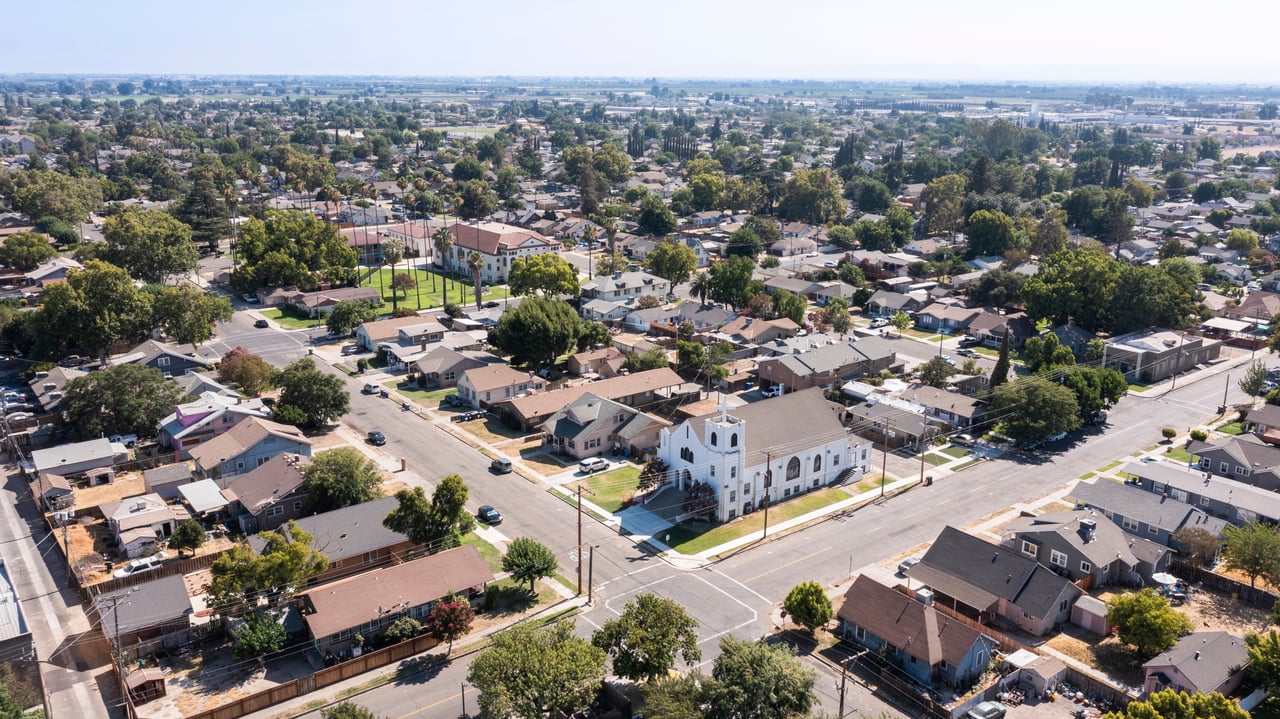
Tucked into the northern reaches of Long Beach, California Heights—known to nearly everyone who lives here simply as "Cal Heights"—is one of those rare neighborhoods that feels like it belongs to another era while sitting squarely in the middle of modern Southern California life. Walk its streets and you'll notice the details first: red terra-cotta roofs catching the afternoon light, arched entryways framed in decorative ironwork, vintage street lamps standing over sidewalks wide enough to actually stroll. This is a place where the architecture tells a story, where neighbors know each other's names, and where a home is often something people hold onto for decades rather than years.
What makes Cal Heights special isn't any single feature—it's the way history, community, and location come together in a package you simply can't find in a newer tract development. As agents who work this part of Long Beach closely, we've watched buyers fall in love with the neighborhood the moment they turn off a busy boulevard and onto one of its quiet, tree-lined interior streets. This guide is meant to give you that same clear-eyed understanding of what living here really means, from its origins to its market to the practical realities of owning a nearly century-old home.
California Heights owes its existence to oil. Until the early 1920s, the land here was part of the sprawling Bixby Ranch—Rancho Los Cerritos—used for grazing and crops rather than homes. That changed almost overnight in 1921, when oil was struck on nearby Signal Hill. The strike set off a regional land boom, drawing thousands of workers, entrepreneurs, and new families to the area, and the Jotham Bixby Company began carving the ranch land into residential tracts to meet the surging demand for suburban housing.
By 1927, residents were already petitioning the City of Long Beach for paved roads, sidewalks, and street lighting, and the neighborhood filled in rapidly through the late 1920s and 1930s before reaching full build-out in the 1940s. One charming quirk from that era still shapes the neighborhood today: as Signal Hill and downtown Long Beach industrialized around the oil business, several older Craftsman bungalows were physically picked up and relocated onto empty lots in Cal Heights to save on construction time and cost. It's a small detail, but it's the kind of thing that gives the neighborhood its layered, lived-in character—these are homes with genuine stories behind them.
If there's one thing that defines California Heights above all else, it's the architecture. The neighborhood is celebrated for a cohesive early-to-mid-20th-century look, anchored overwhelmingly by Spanish Colonial Revival homes—the white and cream stucco walls, red terra-cotta tile roofs, arched entryways, decorative wrought iron, and focal picture windows that have become the visual signature of the area. Woven among them you'll find distinctive Tudor Revival and Norman Revival homes with steep gabled roofs, exposed woodwork, and brick or stone accents, along with the relocated Craftsman bungalows with their low-pitched roofs and deep front porches. Later neo-traditional and mid-century infill homes, built mostly between 1938 and 1950, round out the mix.
The story of how this character was preserved is worth knowing, because it directly affects anyone buying here. By the late 1980s, much of the neighborhood had been zoned for multi-family units (R-2), and residents grew alarmed that developers would demolish original single-family homes for higher-density projects. In response, the community organized, formed coalitions, and successfully petitioned the city to down-zone the area back to single-family residential. That grassroots effort led to California Heights being officially designated Long Beach's fourth municipal historic district in February 1990. In May 2000, the district expanded eastward to fold in additional blocks along Rose Avenue, Gardenia Avenue, and the west side of Gaviota Avenue. Today it stands as the largest historic district in Long Beach, encompassing roughly 1,500 single-family homes.
That designation is a genuine benefit, but it comes with rules buyers should understand up front. Any exterior modification visible from the street—windows, roofing, additions—requires a city-issued Certificate of Appropriateness to ensure changes preserve the neighborhood's 1920s-to-1940s character. On the flip side, that same commitment to preservation is what qualifies many homeowners for California's Mills Act, a program that can meaningfully reduce property taxes in exchange for maintaining a historic home. It's a trade-off that rewards buyers who love these houses for what they are.
California Heights occupies a compact footprint of roughly 0.8 square miles in northern Long Beach, sitting just south of Bixby Knolls and north of Signal Hill. It's primarily a residential enclave framed by major arterial roads: Bixby Road to the north, Wardlow Road to the south, Atlantic Avenue to the west (separating it from Los Cerritos and Bixby Knolls), and Cherry Avenue to the east, along the Long Beach Airport corridor.
That boundary structure creates an appealing contrast. Atlantic Avenue functions as the neighborhood's commercial backbone, lined with local cafes, boutique markets, and dining, while the interior streets remain quiet and residential—tree-lined avenues, vintage light posts, and the kind of wide, walkable sidewalks that invite evening strolls. It's a layout that gives residents easy access to daily conveniences without sacrificing the calm of a genuinely residential setting.
California Heights is consistently one of Long Beach's most desirable and competitive residential markets, driven by its architectural charm, its active neighborhood association, and a strong shared sense of community. The housing stock is composed almost entirely of single-family detached homes; because of the historic designation, you'll rarely see large modern complexes or apartment buildings inside the neighborhood interior.
Most homes fall into a few recognizable categories. The Spanish Colonial Revival homes from the 1920s and 1930s typically offer two to three bedrooms across 1,200 to 1,800 square feet, often with original character details like hardwood floors, coved ceilings, clay tile roofs, and arched interior doorways. Tudor and Craftsman cottages tend toward cozy two-bedroom layouts with pitched rooflines, original built-ins, and stone or brick accents. And a smaller set of expanded custom historic homes have been thoughtfully enlarged to three or four bedrooms—2,000 to 3,500-plus square feet—while preserving their original historic facades.
As for pricing, the figures below reflect general market ranges rather than a live snapshot, so treat them as a starting point and reach out for current numbers before making decisions:
Market Indicator | Typical Value / Range |
|---|---|
Median Home Price | ~$1.1 Million |
Price per Square Foot | ~$650–$700 |
Entry-Level Homes (2-bed/1-bath) | $850,000–$975,000 |
Larger / Updated Properties | $1.2 Million–$1.6+ Million |
Pace of Market | Very fast (avg. 25–35 days on market) |
Buyers gravitate to Cal Heights for reasons that go beyond the houses themselves. Many homes qualify for the Mills Act, which can reduce property taxes substantially in exchange for maintaining preservation standards. The strict historic guidelines that prevent over-development also help protect property values over time. And the community itself—the annual neighborhood garage sale, ice cream socials, and alley cleanup days organized by the California Heights Neighborhood Association—creates a stability and warmth that keeps demand high year after year.
Living in California Heights feels like inhabiting a small-town pocket within a large coastal city. It's common to see residents out walking dogs, waving from front porches, or pausing to chat with a neighbor—and many take real pride in maintaining both their historic homes and their front lawns. This isn't a neighborhood where people disappear into their garages.
Much of that cohesion flows through the California Heights Neighborhood Association (CHNA), one of the most active volunteer organizations in Long Beach. The CHNA publishes a regular print newsletter, The Cal Heights News, organizes block watches, coordinates beautification projects, and advocates for the neighborhood at City Hall. The social calendar reflects that energy: the Cal Heights Home & Garden Tour showcases meticulously restored properties and thoughtful landscaping, annual block parties bring live music, local vendors, and food trucks, and organized multi-block community garage sales draw shoppers from across the region.
Daily life leans heavily on the Atlantic Avenue corridor along the western edge, where residents can walk to independent coffee shops, vintage boutiques, bakeries, craft breweries, and neighborhood restaurants. Because Cal Heights borders Bixby Knolls, residents also enjoy easy access to the popular monthly "First Fridays" art walk along Atlantic Avenue, with live music, food pop-ups, and shops staying open late. It adds up to a lifestyle that's social without being frenetic—engaged, walkable, and genuinely neighborly.
California Heights is fundamentally a residential historic district of tree-lined streets, but residents are never far from open space. Los Cerritos Park, less than half a mile west, is the go-to spot for local families—a seven-acre park with lighted tennis courts, shaded playgrounds, wide green lawns, and a walkable perimeter that hosts free summer performances by the Long Beach Municipal Band. Just north in Bixby Knolls, Scherer Park offers duck ponds, picnic areas, basketball courts, and a community center.
For larger outings, Heartwell Park & Golf Course to the east spans more than 112 acres with a paved bike and walking path, a stocked fishing pond, sports fields, fitness courses, and an 18-hole par-3 golf course. And about ten minutes away sits El Dorado Park & Nature Center, Long Beach's largest regional park, with over 380 acres of green space, lakes, miles of paved bike trails, an archery range, and a 105-acre nature sanctuary crossed by dirt hiking trails.
The neighborhood's flat topography makes everyday jogging, dog walking, and casual cycling effortless, and Southern California's mild climate means those activities happen year-round. When residents want the water, the Long Beach beachfront and coastal bike paths are only about fifteen minutes south, opening up weekend beach trips, paddleboarding in Alamitos Bay, and sailing.
Because Cal Heights blends seamlessly into Bixby Knolls, residents enjoy some of the best locally owned food and drink spots in Long Beach, most of them clustered along Atlantic Avenue, Wardlow Road, and Orange Avenue.
Mornings tend to revolve around a few beloved staples. The Merchant is known for scratch-baked pastries, artisan sourdough, and carefully poured espresso, and it functions as an informal gathering hub for neighbors. Nonna Mercato is part Italian café and part fresh pasta market and bakery—a natural stop for morning espresso, fresh brioche, or a casual lunch. Sala Coffee & Wine runs a dual concept, serving pour-over coffee and breakfast toasts by day before shifting into a cozy natural-wine bar in the evening.
When it comes to dinner and drinks, the options lean local and characterful. Thunderbolt Pizza turns out Detroit-style pan pizza with a light, crispy crust that's become a weeknight favorite. Rasselbock Kitchen & Beer Garden brings traditional German fare—sausages, schnitzel, pretzels—alongside an extensive craft beer list, while Dutch's Brewhouse is a neighborhood hangout where you can grab a local beer, order pub food, or even brew your own batch on-site. A little further up Atlantic, Lola's Mexican Cuisine offers upscale modern Mexican dishes, a famous green salsa, and craft margaritas on an outdoor patio.
One of the quiet luxuries of living in California Heights is that daily errands rarely take more than five or ten minutes. Trader Joe's sits right on Atlantic Avenue for quick grocery runs, and the nearby Bixby Knolls Shopping Center rounds out the essentials with a CVS Pharmacy, Crunch Fitness, and local banks. For home projects—especially relevant in a neighborhood full of historic houses—residents lean on long-standing local hardware and repair businesses along Wardlow and Orange Avenue for paint, restoration supplies, and gardening needs.
The area also delivers on character-driven and big-box shopping alike. Atlantic Avenue is dotted with independent gift shops, vintage clothing stores, antique dealers, and florists that reflect the neighborhood's artistic streak. About ten minutes east near the airport, the Long Beach Exchange (LBX) offers major retail brands, fitness studios, and The Hangar, a striking food hall built around an aircraft-hangar concept. And for the big household runs, Costco, Target, Home Depot, and Best Buy all sit within a three-to-five-mile radius in Signal Hill and Lakewood.
California Heights is one of the more transit-accessible neighborhoods in the Gateway Cities region, thanks to a central location wedged between major freeways. The I-405 runs directly along the southern border via the Wardlow and Spring Street ramps, making Orange County—including John Wayne Airport, about twenty minutes out—and West LA easy to reach. The I-710 sits roughly two miles west, offering a direct route north to Downtown Los Angeles and south to the Port of Long Beach, while the I-605 and SR-91 are a short hop away for east-west commutes into North Orange County and inland LA.
Public transit is a real option here, not an afterthought. Two LA Metro A Line light-rail stations—Wardlow and Willow—sit just south of the neighborhood, offering a traffic-free ride to Downtown Long Beach in about ten minutes or a longer run north through Downtown LA and up to Pasadena. Long Beach Transit buses run along Atlantic, Orange, and Wardlow, connecting residents to local hubs, the beach districts, and Cal State Long Beach, and a 405 Commuter Express even runs from Willow Station to West LA and UCLA. For air travel, Long Beach Airport (LGB) is less than ten minutes east—a famously relaxed airport with an outdoor concourse, short security lines, and direct flights across the country.
That combination of freeway access and rail is a genuine differentiator: for households where one person commutes toward Los Angeles and another toward Orange County, Cal Heights sits at a strategic midpoint that few Long Beach neighborhoods can match.
California Heights falls within the Long Beach Unified School District (LBUSD), a nationally recognized district known for strong academics and an unusually flexible high school choice program. At the elementary level, Longfellow Elementary is within walking distance for many residents and is well regarded for its involved parent community and academic performance, while Los Cerritos Elementary just west serves adjacent boundary zones. For middle school, Hughes Middle School sits right on the neighborhood's edge on California Avenue, with solid academics along with music and athletics.
High school is where LBUSD's approach stands out. Rather than being strictly tied to a single neighborhood campus, students can apply through a School Choice system to specialized pathways in areas like STEM, the arts, and medicine across the district. Standout options include Long Beach Polytechnic High (Poly), famous for its PACE gifted program and specialized academies, along with McBride High School and its engineering, medical, and criminal justice magnets, and the Sato Academy of Mathematics & Science.
Families seeking alternatives have those too. St. Barnabas Parish School offers private Catholic education from transitional kindergarten through eighth grade, and Intellectual Virtues Academy (IVA), a public charter middle school in the Bixby Knolls area, focuses on character-based learning and critical thinking. For higher education, Cal State University, Long Beach is about fifteen minutes southeast, and Long Beach City College's Liberal Arts Campus sits just east on Carson Street.
Cal Heights isn't just an address—it's a particular way of living, and it tends to attract a specific kind of buyer. Architecture and vintage lovers find a paradise here: if you'd choose coved plaster ceilings, original hardwood floors, mahogany built-ins, and terra-cotta roofs over a standard modern tract home, this is your neighborhood. Families and long-term residents are drawn by the well-regarded neighborhood schools and the quiet, low-traffic streets, which make it a natural fit for putting down roots. Community-minded people thrive on the block parties, the neighborhood association, and the front-lawn conversations. And for dual-commute households working across both LA and Orange County, the location near the 405/710 intersection and the Metro A Line is hard to beat.
It's worth being honest about who might find it less ideal. Buyers who need sprawling square footage will find that most homes fall in the 1,200-to-1,800-square-foot range, and truly large floor plans are rare. Those set on open-concept living should know these homes reflect traditional 1920s-to-1940s layouts, with dedicated dining rooms and more defined, individual spaces. And anyone who wants total freedom to dramatically alter a home's exterior—modern black vinyl windows, removed stucco, a large second story—will likely find the historic preservation rules frustrating rather than freeing. Knowing which camp you fall into is the surest way to know whether Cal Heights is right for you.
Buying in a designated historic district brings real advantages, but it also carries considerations that most standard home purchases don't, and understanding them before you're in escrow makes all the difference.
First, the historic district guidelines. Because Cal Heights is a municipal historic district, any change to the exterior visible from the street requires city review. Before painting, replacing a roof, changing windows, or adding on, you'll need to apply for a Certificate of Appropriateness through Long Beach Development Services—and the city's standards strongly favor repairing original materials, such as wood sash windows, over replacing them with modern substitutes. It's not a reason to shy away; it's simply a reality to plan around.
Second, the Mills Act, which is one of the neighborhood's genuine financial perks. Owners enter a rolling ten-year agreement with the City of Long Beach to restore and maintain their home's historic integrity, and in exchange, property taxes are reassessed using an income-based formula rather than market value—often producing a meaningful reduction for recent buyers. Importantly, if you buy a home that already carries a Mills Act contract, that contract transfers to you automatically. It's a factor worth confirming on any property you seriously consider, because it can materially change your monthly costs.
Third, and critically, specialized inspections are essential when buying a home that may be close to a century old. Standard inspections don't go far enough. A few areas deserve particular attention in homes of this vintage:
Area to Inspect | What to Watch For |
|---|---|
Foundation | Raised pier-and-beam foundations; confirm the home has been seismically retrofitted (bolted) to the foundation |
Electrical | Outdated knob-and-tube wiring or ungrounded two-prong outlets |
Plumbing | Corroding galvanized steel or cast-iron sewer lines; always order a sewer scope out to the main line |
Unpermitted Work | Past unpermitted vinyl windows or additions the city may later require you to correct |
None of these should scare a buyer away—they're normal for the era and manageable with the right guidance. But going in informed, with the right inspectors and an agent who knows how these homes behave, is what separates a smooth purchase from an expensive surprise.
California Heights rewards buyers who understand it—its history, its rules, its rhythms, and the small details that make one block or one home the right fit over another. That's exactly where having the right local partner matters most, and it's where Melinda Elmer and The Elmer Team come in. As a team, we pride ourselves on being among the top 1% of agents in the current market, consistently earning recognition as leading buyer's and listing agents, with honors from the Women's Council of REALTORS® and multiple years of Los Angeles Magazine's prestigious Five Star rating. That experience translates into real advantages for our clients: a deep working knowledge of historic districts, Mills Act contracts, and the specialized inspections these century-old homes require, paired with an unwavering commitment to securing the best deals for buyers and top market value for sellers.
Whether you're just beginning to explore Cal Heights, weighing a specific home against its Mills Act status, or preparing to sell a beloved historic property, we'd be glad to help you navigate it with clarity and care. Reach out to The Elmer Team at theelmerteam.com to start a conversation—no pressure, just honest, local expertise from a team that knows this neighborhood inside and out.
Neighborhood details reflect general information about California Heights and should be verified for your specific situation. Market figures are illustrative ranges rather than a current snapshot—contact The Elmer Team for up-to-date pricing and availability.
There's plenty to do around California Heights, including shopping, dining, nightlife, parks, and more. Data provided by Walk Score and Yelp.
Explore popular things to do in the area, including Inarex Usa, Hair Associates, and Aesthetics by Vannida.
| Name | Category | Distance | Reviews |
Ratings by
Yelp
|
|---|---|---|---|---|
| Active | 0.19 miles | 0 reviews | 0/5 stars | |
| Beauty | 0.27 miles | 1 review | 1/5 stars | |
| Beauty | 0.38 miles | 4 reviews | 5/5 stars | |
| Beauty | 0.62 miles | 0 reviews | 0/5 stars | |
|
|
||||
|
|
||||
|
|
||||
|
|
||||
|
|
||||
|
|
California Heights has 3,611 households, with an average household size of 3. Data provided by the U.S. Census Bureau. Here’s what the people living in California Heights do for work — and how long it takes them to get there. Data provided by the U.S. Census Bureau. 8,432 people call California Heights home. The population density is 16,873 and the largest age group is Data provided by the U.S. Census Bureau.
Total Population
Population Density Population Density This is the number of people per square mile in a neighborhood.
Median Age
Men vs Women
Population by Age Group
0-9 Years
10-17 Years
18-24 Years
25-64 Years
65-74 Years
75+ Years
Education Level
Total Households
Average Household Size
Average individual Income
Households with Children
With Children:
Without Children:
Marital Status
Blue vs White Collar Workers
Blue Collar:
White Collar: