Most people think divorce means a courtroom battle. There's another path that keeps your decisions, your finances, and your privacy in your own hands.
When most people hear the word divorce, they picture the same thing: a courtroom, two lawyers facing off, and a judge handing down decisions about the most personal parts of your life. It's an image that makes an already painful moment feel even more frightening. But it isn't the only way through, and for many families it isn't the best one.
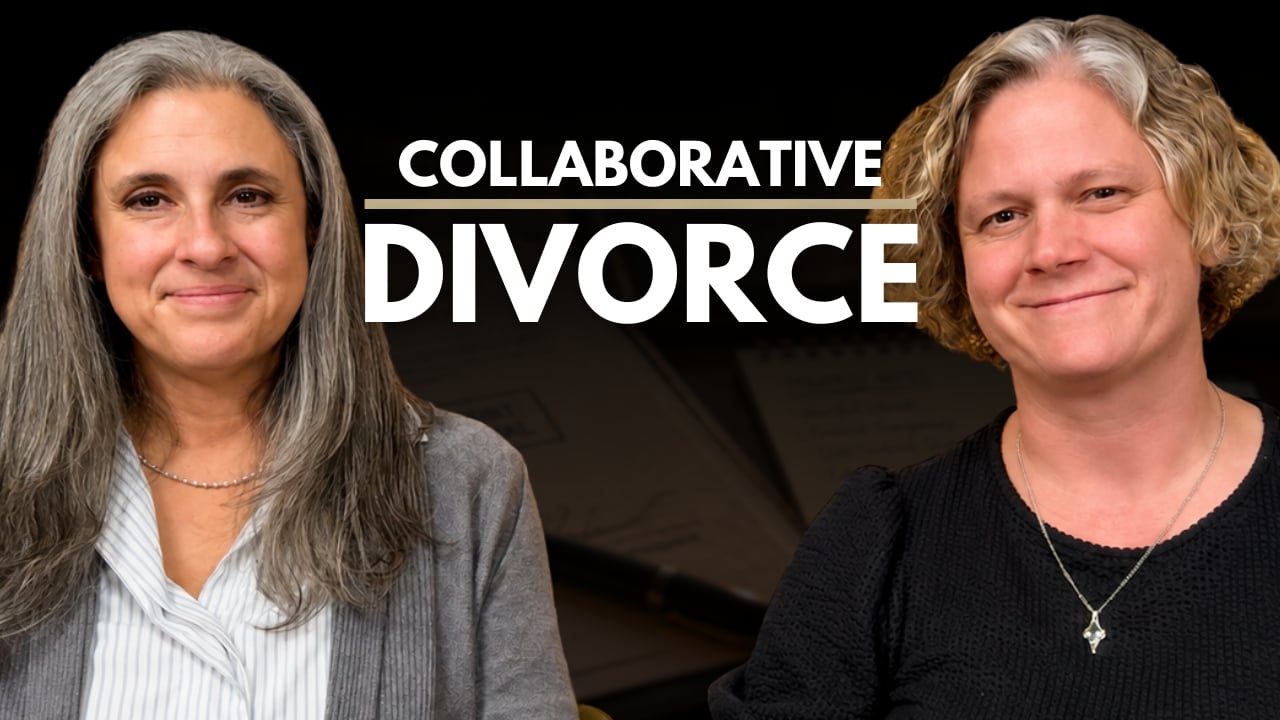
I recently sat down with Diana Martinez of the Law Offices of Diana Martinez, who specializes in collaborative and mediation family law, to talk through what the collaborative divorce process actually looks like.
If you or someone you care about is facing this decision, it's worth understanding the options before assuming a court battle is the only road.
What collaborative divorce actually is. Collaborative divorce is a legal process in which both parties agree up front that they don't want to take their case to court. Instead, they resolve things with the help of a professional team.
That usually starts with two collaborative attorneys, family law attorneys trained in both collaboration and mediation, and the difference in mindset is the whole point. Rather than preparing for a fight, everyone works together toward an agreement that actually works for the family.
As needed, the team can bring in other neutral professionals, like a family specialist, a divorce coach, or a neutral financial expert.
Who it's a good fit for. As Diana put it, collaborative divorce is really for anyone who wants to protect what they've built, financially or personally. One of the biggest misconceptions is that both partners have to already agree on everything before they start. You don't. You only have to agree on one thing: that you want to reach an agreement without a judge making those decisions for you.
When there are complex assets in the picture, a family business, real estate, investment portfolios, and executive compensation, the collaborative process lets you bring in financial specialists who genuinely understand that world. And when communication is strained, or emotions are running high, a family specialist can help manage that side of things, too.
The privacy most people overlook. Here's something a lot of people don't realize until it's too late. When you file documents with the court, they become public record. You don't even have to go to the courthouse to see them anymore; you can order them online.
"The highest cost in a divorce usually isn't the assets."
That means declarations, income and expense statements, tax details, pay stubs, and the kind of personal allegations that can come up in a divorce can end up viewable by the public. Most people would much rather keep all of that private, and resolving out of court lets you do exactly that.
How is it different from mediation and litigation? Diana uses an analogy that makes the difference easy to picture. Litigation is a court battle; each side has its warrior, each warrior decides which battles to fight and how, and at the end of the day, the judge decides the winner.
Mediation is a negotiation table, where a neutral party, usually a lawyer, acts as a referee and may make a recommendation that can be binding or not, but you're ultimately negotiating on your own behalf. Collaborative gives you the best of both worlds. You have your own legal advisor and a cooperative network around you.
Everyone, including the attorneys, signs an agreement committing to the process, and that accountability keeps people on track. You still have your attorneys at the table, more like coaches than combatants, alongside the other professionals, the family specialist, the neutral financial expert, the right person for each task, so you're making informed decisions every step of the way.
What about the cost? The common worry is that bringing in all these professionals must be expensive. Diana's answer is simple: compared to what? Contested litigation can cost hundreds of thousands of dollars and drag on for three, four, or even five years, generating the kind of public conflict that follows a family and a reputation for a long time. And here's the part most people miss.
The biggest cost driver in a divorce usually isn't the assets, and it isn't even complex law. It's the communication breakdown and the emotional turmoil, the fear, hurt, and anger. When those emotions go unmanaged, they fuel conflict, which in turn fuels billable hours. In litigation, no one is addressing that piece; you're left to fight it out while the meter runs.
In the collaborative process, there's a professional whose entire role is to help both partners communicate more effectively and manage those emotional triggers. As Diana said, that's not therapy, it's strategy. When people can actually hear each other, decisions get made faster with less back-and-forth, and the whole process becomes more efficient, which goes straight to the bottom line.
Why it comes down to more than money. Collaborative divorce is typically faster and more cost-efficient, but the real difference is that the outcome is one you've shaped together. You're not handing the most important decisions of your life to a courtroom. As Diana put it, that's not just a financial calculation, it's a values one.
If you have questions about the collaborative process, the best first step is to reach Diana's office at 562-367-8001 to speak with her paralegal, Brittany, and set up a free 15-minute introduction or a time to go deeper into your situation.
And if I can help you think through the real estate side of a transition like this, I'd be glad to. As a Certified Divorce Real Estate Expert, I work as a neutral resource focused on the home itself. Call or text me at 562-316-2915, email me at [email protected], or visit theelmerteam.com.